Two neighbors can buy the exact same window and end up with very different results. The difference is not the window. It is how the old one comes out and how the new one goes in.
There are two ways to replace a window: an insert (sometimes called a pocket replacement) or a full-frame replacement. One is faster and less invasive. The other fixes problems you cannot see. Here is how to tell which one your home needs.
The quick answer. An insert replacement keeps your existing window frame and trim and sets a new window inside it. A full-frame replacement removes everything down to the rough opening in the wall, then installs a complete new window with new flashing, insulation, and trim. Inserts cost less and disturb less. Full-frame costs more but lets your installer inspect and repair the opening, add insulation, and change the window's size or style.
How an insert replacement works. The installer removes the old sashes, the parts that hold the glass, along with the stops and balances. The original frame, sill, and interior and exterior trim stay in place. A new window, sized to fit inside the old frame, is set into that pocket, shimmed, insulated, and sealed. Interior trim usually stays untouched, so there is little or no painting or drywall work afterward.
Where inserts make sense. Inserts are a good fit when the existing frames are square, solid, and dry. They work well when you love your interior trim and do not want it disturbed, when the budget is tight, and when you are happy with the current size and style of each window. On a home with sound wood frames, an insert can deliver most of the energy benefit of new glass at a lower cost.
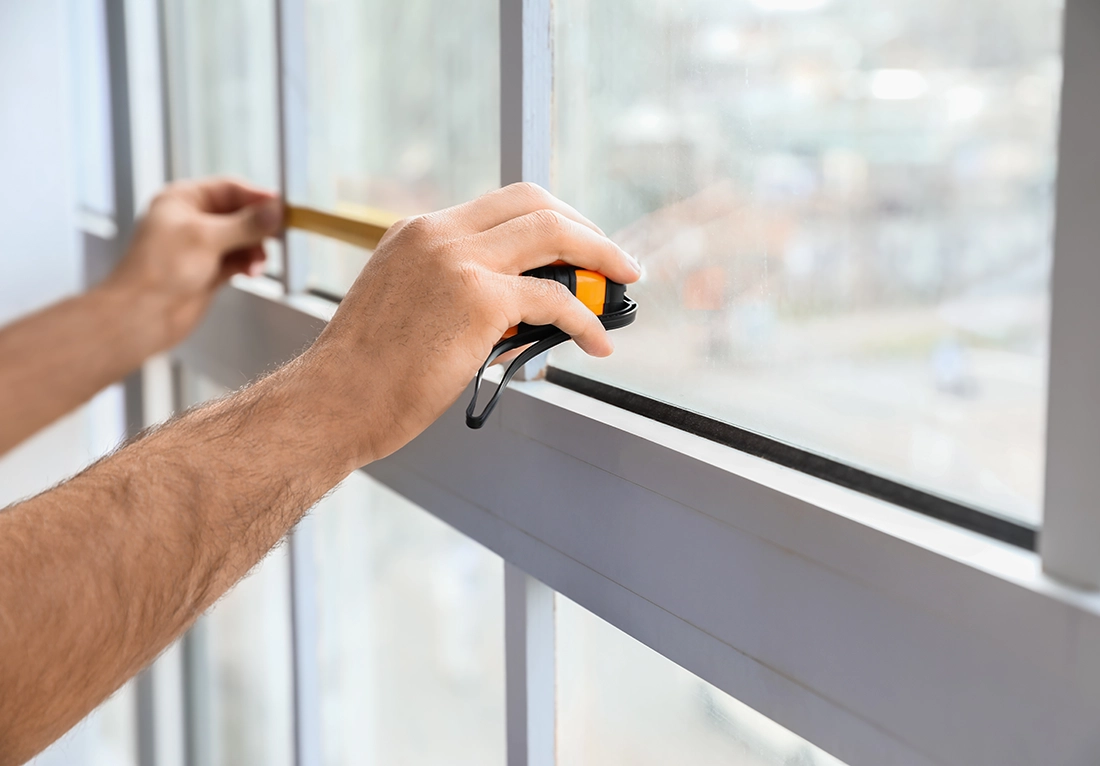
The trade-off: less glass. Because the new window sits inside the old frame, you lose a little glass area on every side. On a small window it is barely noticeable. On a large picture window or a room that already feels dark, it can be. Ask your installer to show you the difference in visible glass before you decide.
How a full-frame replacement works. The installer removes the entire window: sashes, frame, sill, and trim, down to the framing of the wall. That exposes the rough opening. Now they can see what is really going on. Is the sill plate soft? Is there water staining on the sheathing? Was the original window ever flashed? Any rot gets cut out and repaired, the opening is wrapped and flashed correctly, the new window goes in, and the gap around it is insulated before new trim goes on.
Where full-frame makes sense. Full-frame is the right call when there are signs of water damage, such as soft wood, peeling paint below the sill, stains on the drywall, or mold. It is also the right call when frames are warped or out of square, when you want to change the size or style of a window, and when you are replacing siding at the same time. More on that last one below.
Signs your frames are not insert-ready. Press a screwdriver into the bottom corners of the sill and frame. If it sinks in, the wood is soft. Look for windows that will not stay open or close evenly, gaps you can see daylight through, or water stains on the wall below the window. Any of these mean an insert would be covering up a problem, not fixing it. Our article on the signs you need new windows covers more of them.
The Chicago-winter factor. Our freeze-thaw cycles are hard on window openings. Water that gets behind old trim freezes, expands, and slowly works joints apart. Many older windows in the area were installed before modern flashing tapes and house wraps were common. A full-frame replacement is the only way to correct that. It also lets the installer fill the gap between the window and the framing with low-expansion foam or insulation, and that gap is a major source of drafts in older homes.
That said, if the frames are solid, a well-installed insert with good insulation and sealant will still make a dramatic difference compared with drafty original windows. Our article on energy-efficient windows in Chicago winters explains what to look for in the glass itself.
Doing siding at the same time? Go full-frame. This is the single best time to do full-frame windows. When the old siding comes off, the window openings are already exposed from the outside. The new windows can be flashed directly into the new house wrap, so water is shed in one continuous, layered system from the roof to the foundation. Doing windows and siding together, with one crew responsible for how they meet, removes the most common leak point on a home's exterior. See what goes behind your siding for how that layered system works.
Changing the size or style. Want to turn a slider into a casement, add a larger picture window, or bring a basement or bedroom window up to egress size? That means a full-frame replacement, and sometimes reframing the opening. Bedroom windows have to meet emergency escape requirements. Our window styles guide covers egress basics.
Homes built before 1978. If your home was built before 1978, it may have lead-based paint on the original window trim and sashes. Federal rules require contractors who disturb painted surfaces in these homes to be certified and to follow lead-safe work practices. This applies to both methods, but full-frame removal disturbs more painted surface. Ask any installer about it, and see the EPA's Renovation, Repair and Painting rule for details.
Permits. In Orland Park and most neighboring villages, window replacement needs a permit no matter which method is used. Your contractor should pull it and schedule the final inspection. Our permits and contracts guide walks through what to check.
Cost and time. Insert replacements are usually less expensive and faster, often several windows in a day, because there is less demolition and little trim work. Full-frame replacements cost more per opening because of the extra labor, new trim, and any repairs found once the old window is out. The honest way to compare is to get both prices from the same contractor for your specific windows.
You do not have to choose one method for the whole house. Many homes get a mix. Solid frames on the protected side of the house get inserts. The south and west windows that take the weather, or the ones with soft sills, get full-frame. A good installer will walk the house with you and make a recommendation window by window.
Get a window-by-window recommendation. SWS Siding & Windows installs Marvin, Andersen, and Alliance windows using both methods throughout Orland Park and the south suburbs. We will check every frame, show you what we find, and tell you straight where an insert will do and where full-frame is worth it. Visit our windows page or call 708-215-2737 for a free estimate.